
How to Use a Screen Rolling Tool for Commercial Window Screens
- michaelfox0
- Jul 30, 2025
- 3 min read
Maintaining commercial buildings often involves regular repairs to window screens—especially in high-traffic areas like offices, schools, healthcare facilities, and hospitality environments. Knowing how to use a screen rolling tool is essential for ensuring secure, long-lasting screen installations in commercial-grade window systems.
What Is a Screen Rolling Tool?
A screen rolling tool (or spline roller) is a handheld device used to press screen mesh and spline into the channel of a window screen frame. Most tools feature a double-wheel design: one convex wheel to help lay the mesh and one concave wheel to press the spline into place. This tool is critical for achieving tight, professional-quality screen installations—especially in heavy-duty commercial frames.

How to Use a Screen Rolling Tool
1: Assemble Your Materials
For commercial window screen installation or repair, you’ll need:
A commercial-grade screen rolling tool
Heavy-duty screen mesh (typically fiberglass or metal)
Commercial spline (rubber or vinyl)
A utility knife or scissors
A stable work surface
An aluminum or steel screen frame

2: Prepare the Frame
If you’re re-screening an existing frame, remove the damaged screen and old spline. Use a flathead screwdriver or pick tool to lift out the spline. Clean the spline channel to ensure a clean, debris-free surface.

3: Cut and Position the New Mesh
Lay the new mesh across the frame, leaving at least one inch of overhang on all sides. Commercial mesh is often thicker or more rigid than residential mesh, so handle it carefully to prevent kinks or creases.

4: Set the Spline in Place
Begin at one corner and lay the spline over the mesh, lining it up with the groove in the screen frame. Use your fingers to keep it taut and in position.

5: Roll the Spline with the Tool
This is the most critical part of knowing how to use a screen rolling tool:
Use the concave wheel to press the spline into the groove, embedding the mesh securely.
Apply firm, consistent pressure and move slowly to avoid damaging the mesh.
Continue around the perimeter, using the convex wheel beforehand if the mesh needs to be pre-seated into the channel.
Heavy-duty commercial mesh and spline may require a bit more effort than residential materials, so a professional-grade roller tool is recommended.

6: Trim Excess Mesh
After the spline is securely installed, trim the mesh using a utility knife. Cut just inside the spline line to remove excess material cleanly.
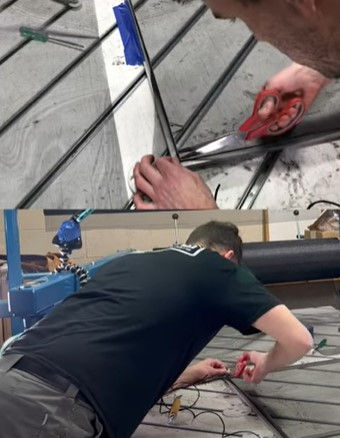
7: Inspect and Test
Check for loose edges or gaps. For commercial applications, it’s critical that the screen is tight and secure to prevent wear from wind, environmental factors, or frequent use.

Best Practices for Commercial Settings
Use commercial-grade tools for larger or reinforced aluminum frames.
Store screen mesh flat to avoid distortion before installation.
Choose the appropriate spline diameter for a secure fit in heavy-duty frames.
For high-volume properties, consider investing in pneumatic spline rollers to improve speed and consistency.
Conclusion
In commercial buildings, properly installed window screens contribute to ventilation, comfort, and pest control. Learning how to use a screen rolling tool ensures your screen replacements are tight, durable, and professional. Whether you’re managing facility maintenance or performing contracted repairs, mastering this tool will help you complete screen installations efficiently and to spec. For more information or to schedule a consultation for repair, Contact Us Today! The WRS Team is here to assist you.


Comments