


How to Install Common Operators in Awning & Casement Windows: Commercial Version
Commercial buildings rely on durable, easily serviceable window hardware to support ventilation, security, and long-term performance. Whether you’re working in schools, healthcare facilities, government buildings, or large multi-tenant properties, understanding how to install common window operators in awning and casement windows is essential for maintaining safe, reliable operation. This guide focuses on the unique needs of commercial applications, where proper installation directly impacts energy efficiency, occupant comfort, and compliance with safety standards.
What Makes Commercial Window Operator Installation Different?
Commercial windows endure heavy use, higher safety requirements, and more demanding building-maintenance cycles. Compared to residential hardware, commercial operators often feature:
Heavy-duty arms and linkages
Reinforced housings for high-traffic operation
Vandal-resistant components
ADA-compliant crank options
Larger sash sizes requiring stronger gearing
Selecting and installing the right operator ensures smooth operation even under daily, repeated use.
Tools and Materials Needed:
Before installing a commercial-grade operator, prepare the following:
Replacement operator matched by model, brand, and handedness
Commercial-spec screws (stainless steel preferred)
Power drill with torque control
Heavy-duty screwdrivers
Putty knife or narrow pry tool
Measuring tape or digital calipers
Pencil/marker for alignment
Thread-locker (as required by some commercial brands)
How to Install Operators in Commercial Casement Windows
1. Remove the Existing Operator
Open the sash to access the operator arm and track.
Disconnect the arm from the sash guide, often secured with:
A retaining clip
A slide guide
A commercial hinge-track fastener
Unscrew the operator from the interior frame.
Carefully lift the unit to avoid bending steel tracks or damaging the sash.

2. Inspect and Prepare the Frame
Clear out debris or old sealant.
Check aluminum or steel frames for corrosion.
Ensure hinge tracks are fully secured—loose tracks often cause binding.
Confirm the sill or jamb is structurally sound for re-fastening.

3. Position the New Operator
Align the new operator to the same location as the original.
Use existing mounting holes when possible to ensure factory-grade alignment.
Lightly secure all screws, leaving room for adjustment.

4. Reconnect the Operator Arm
Reattach the arm to the sash track or pivot point.
Confirm that the sash stays centered in the frame throughout movement.
Tighten all hardware using a consistent torque to prevent stripping or frame distortion.

5. Test the Window Under Full Load
Cycle the operator from fully closed to maximum extension.
Ensure no binding occurs, especially at the hinge track extremes.
Verify that gear movement supports the weight of larger commercial sashes.

How to Install Operators in Commercial Awning Windows
1. Detach the Old Awning Operator
Open the window slightly to release pressure.
Unscrew operator base plates, linkages, and arms.
Disconnect the sash brackets—commercial brackets are often reinforced and may require extra force or leverage.

2. Ready the Mounting Area
Remove rust or corrosion from metal frames.
Clean the sill or header where the operator mounts.
Inspect weather seals for gaps—important for commercial energy codes.

3. Install the New Awning Operator
Align the new operator with the original mounting holes.
Confirm the arms match the correct opening direction and sash width.
Secure the operator with commercial-grade screws and, if required, thread-locker.

4. Test and Seal
Cycle the window through multiple open/close operations.
Ensure the sash seals tightly against compression gaskets.
Check for uniform pressure along the perimeter—critical in commercial HVAC environments.
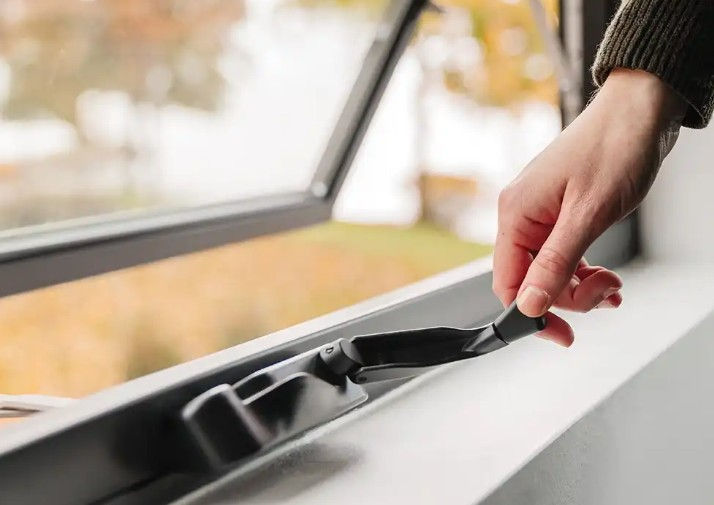
Choosing the Right Operator for Commercial Windows
Commercial settings require hardware that can withstand constant use. When selecting operators, consider:
Brand and model compatibility (e.g., Truth, Ashland, Amesbury, WRS-recommended replacements)
Handedness (left vs. right)
Arm length and gear ratio
Load capacity for oversized commercial sashes
Security or vandal-resistant design
ADA-compliant crank handles
Corrosion-resistant materials for coastal, industrial, or wet environments
Always match the original operator whenever possible to ensure proper movement and alignment.
Common Issues and How to Fix Them
Misaligned Operator or Tracks
Recheck hinge-track position; commercial sashes magnify small misalignments.
Binding or Heavy Cranking
Inspect hinge tracks for debris or bending.
Apply a lubricant spray (never oil-based lubricants).
Sash Not Closing Tight
Adjust bracket placement.
Check compression weatherstripping for wear.
Operator Gear Slipping
Replace with the correct commercial-grade operator—residential models cannot support commercial loads.
Why Proper Installation Matters in Commercial Buildings
Correctly installing operators in commercial awning and casement windows ensures:
Compliance with building ventilation standards
Long-term durability and reduced maintenance costs
Reliable daily operation for staff and occupants
Improved safety and security
Better energy performance and reduced HVAC load
Commercial spaces demand hardware that performs consistently under high usage, making professional-level installation essential. For more information or to schedule a consultation for repair, Contact Us Today! The WRS Team will be happy to assist you.


Comments