


Commercial Window Balance Parts Explained – Learn Now!
In commercial buildings, window performance isn’t just about convenience—it affects tenant comfort, HVAC efficiency, safety, code compliance, and maintenance labor costs. When a sash drops, sticks, or won’t remain in position, the root cause is often a worn or failing balance system. For property managers, maintenance supervisors, and window service providers, understanding window balance parts is essential to reducing downtime, controlling repair costs, and improving the reliability of high-use openings.
This guide breaks down the most common window balance systems—block & tackle, spiral, and constant force balances—and explains the different pieces that make each system work.
Why Window Balance Parts Matter
Window balances counteract sash weight so windows operate smoothly and hold position. In commercial environments, balance systems must withstand:
High-frequency daily use
Heavier sash weights from large glazing packages
Temperature swings, dust, and UV exposure
Regular tilt cycles for cleaning and inspection
Maintenance variability from different teams or vendors
Knowing the differences between window balance parts helps commercial stakeholders minimize downtime and avoid misorders that lead to repeat repairs. If you’re a facility director or a repair tech, learning window balance parts gives you a major advantage.
Block & Tackle Window Balances: Parts & Functions
Block & tackle balances are extremely common in vinyl and aluminum double-hung windows. They use a pulley system to provide strong, smooth counterbalance support.

Core Block & Tackle Window Balance Parts
1. Balance Channel (Metal Housing)
This is the main metal body that holds the internal components. It typically runs vertically along the jamb liner.
Role: Protects the internal cord and pulleys while guiding movement. Common problem: Channel bends or corrodes, causing friction and poor travel.

2. Tension Spring (Internal Coil Spring)
Inside the channel is a coil spring that stores and releases energy as the sash moves.
Role: Provides the lifting force that offsets sash weight. Common problem: Spring fatigue causes sash drift or slamming.

3. Block (Pulley Assembly / “Block & Tackle” Unit)
The “block” contains pulleys that the cord loops through to multiply force and smooth travel.
Role: Converts spring tension into controlled sash support. Common problem: Pulley cracks or seizes → uneven lifting.

4. Cord (Nylon or Composite Cord)
This cord loops through the pulley system, connecting the spring system to the bottom attachment point.
Role: Transfers force from spring to sash shoe/hook. Common problem: Cord frays, stretches, or snaps.

5. Guides (Top and Bottom)
Often plastic end caps on the channel. They typically come in winged or non-winged styles.
Role: Retains internal system, protects edges, and allows movement in the window jamb. Common problem: Plastic breaks, allowing the balance to shift or release.

6. Pivot Lock Shoe (Balance Shoe)
The shoe is the most important interface between the balance and the sash. It travels up and down and connects to the sash via a pivot bar.
Role: Engages the pivot, locks/unlocks tilt features, guides movement. Common problem: Shoe cracks or locking cam fails → sash tilts incorrectly or won’t stay seated.

7. Pivot Bar
A metal bar attached to the sash bottom corner that inserts into the shoe.
Role: Connects sash to shoe and enables tilt-in. Common problem: Pivot bar bends or shears → sash won’t stay aligned or comes loose.

How to Identify Block & Tackle Balances Quickly
Look for:
A metal channel on each side
Tilt-in sash with pivot bars
A shoe visible inside the jamb liner
If these are present, you’re likely dealing with a block & tackle system and will need the correct combination of window balance parts: channel length, shoe type, pivot bar style, and weight rating.
Spiral Window Balances: Parts & Functions
Spiral balances are often found in older vinyl, wood, and aluminum windows. They’re recognizable by the visible spiral rod and a tube or housing.

Core Spiral Window Balance Parts
1. Spiral Rod (Steel Spiral)
This is a metal rod with a spiral groove that stores tension. Depending on if the balance is for a tilt or non-tilt window, the end of the spiral rod will have a different shape. Taking note of this when ordering replacements is very important.
Role: Acts like a torsion spring—tension is wound into the rod. Common problem: Rod bends or loses tension → sash won’t stay up.

2. Spiral Tube (Housing)
A plastic or metal tube that surrounds the rod.
Role: Keeps the rod aligned and protected. Common problem: Tube cracks, causing drag or misalignment.

3. Coupling (End Fitting)
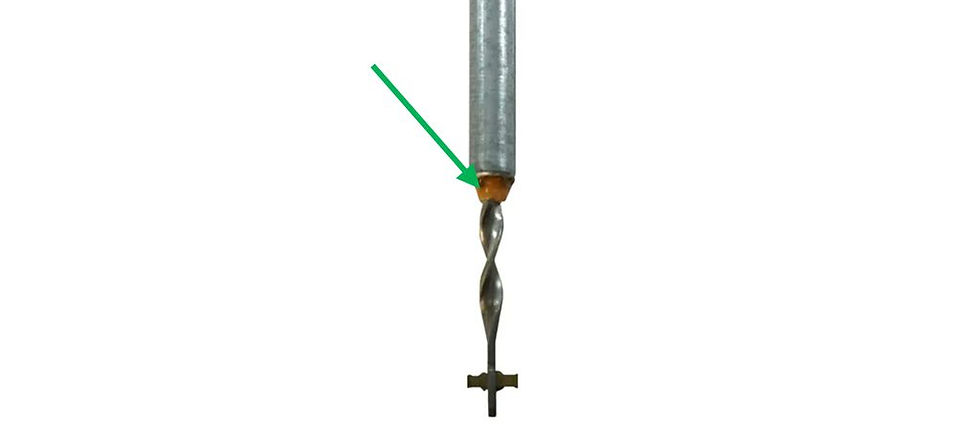
At the bottom end of the spiral rod is the coupling, sometimes also referred to as the tip, which hooks into a shoe or pivot area. The couplings come in different colors that indicate the weight range of the spiral balance, so choosing the correct color is crucial when ordering replacement balances.
Role: Transfers torsion tension to the shoe connection. Common problem: Tip breaks → immediate loss of balance support.
4. Pivot Lock Shoe (Spiral Shoe)
Different from block & tackle shoes, spiral shoes engage the spiral rod tip and provide sash support.
Role: Holds the spiral and supports pivot engagement. Common problem: Shoe cracks, jams, or wears.

5. Pivot Bar (or Corner Pivot)
Same concept: connects sash to the shoe.
Role: Allows sash movement and optional tilt functions. Common problem: Pivot wears, loosens, or bends.

6. Tension Tool (Specialty Tool)
This isn’t installed permanently but is necessary for adjustment.
Role: Used to wind/unwind tension safely. Common problem: Without correct adjustment, the sash will drift or be hard to move.

How to Identify Spiral Balances Quickly
Look for:
A visible spiral metal rod
A tube along the side jamb
Often seen in windows that are older or non-tilt
Spiral systems are serviceable, but correct tensioning is critical.
Constant Force Window Balances: Parts & Functions
Constant force balances use a coiled steel spring that applies consistent tension across the sash travel. These are common in lightweight to medium-weight windows and are often used in non-tilt and tilt applications.

Core Constant Force Window Balance Parts
1. Stainless Steel Coil Spring (The “Constant Force” Coil)
This is a flat, coiled strip of spring steel. These coils are typically stamped with a number to indicate its weight range capacity.
Role: Provides consistent lifting tension as the sash moves. Common problem: Coil snaps, rusts, or loses recoil ability.

2. Coil Housing (Carrier)
A plastic or metal housing holds the coil and controls release.
Role: Prevents coil unraveling or shifting. Common problem: Housing cracks → coil slips or jams.

3. Coil Pivot Lock Shoe
This shoe connects to the sash pivot bar and attaches to the coil. Pivot lock shoes for constant force balances look different from traditional pivot lock shoes and are usually easy to identify.
Role: Transfers coil force to sash and enables tilt. Common problem: Cam wear causes tilt issues or uneven travel.

4. Coil Anchor / Bracket (Top Mount)
At the top, a bracket anchors the coil system to the frame. Brackets are not always required for installation, it depends on which constant force balance you have.
Role: Secures the coil and maintains correct alignment. Common problem: Anchor pulls out or bends → coil misfeeds.

5. Pivot Bar
Again, this attaches the sash to the shoe.
Role: Structural connection for movement and tilt. Common problem: Pivot bar wear creates wobble and uneven closure.

How to Identify Constant Force Balances Quickly
Look for:
A visible flat steel coil inside the jamb track
A compact housing rather than a long metal channel
Often used in windows with a simple track system
When ordering window balance parts for constant force systems, coil strength, shoe type, and mounting style must match precisely.
Common Window Balance Parts That Fail the Most
Across all three systems, these are the most common failure points:
Shoes – crack, jam, or lose tilt-lock function
Pivot bars – bend, shear, or corrode
Cords and pulleys (block & tackle) – fray or seize
Spiral tips and rods – bend or lose tension
Constant force coils – snap or lose recoil
Replacing the correct part restores function quickly without replacing an entire window.
How to Spec Window Balance Parts for Commercial Ordering
For commercial purchasing, maintenance planning, and contractor bids, record:
Balance type (block & tackle, spiral, constant force, UltraLift)
Channel length or coil size
Shoe profile and pivot bar style
Tilt vs non-tilt configuration
Left/right orientation requirements
Sash weight or equivalent balance rating
Commercial best practice: build a standardized balance inventory list for each property and label window types by unit stack to reduce ordering errors and speed up repairs.
Frequently Asked Questions (FAQs)
Can we replace only the shoe or pivot bar?
Often yes. Shoes and pivots are common failure points and can frequently be replaced without changing the entire balance—unless cords, springs, or coils show wear.
What balance type is best for heavy commercial sashes?
Turbo2™ and UltraLift systems generally handle heavier sash weights well. Constant force can also work in many applications, but proper coil rating is critical.
Conclusion
Commercial window performance depends on balance system reliability. Identifying and specifying the correct window balance parts improves safety, reduces tenant complaints, and supports scalable maintenance programs. With proper identification and part standardization, commercial facilities can significantly reduce repair frequency and long-term operating costs. For more information or to schedule a consultation for repair, Contact Us Today! The WRS Team looks forward to assisting you.


Comments